
How to Choose a Luxury Taxi Service in Delhi NCR | FIAARA
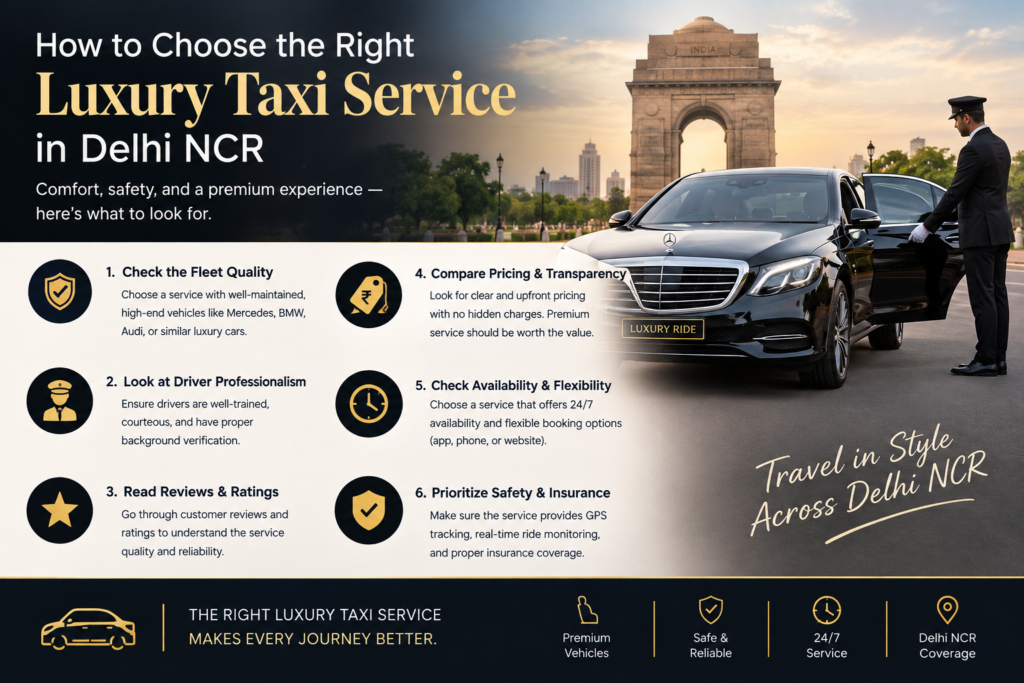
How to Choose the Right Luxury Taxi Service in Delhi NCR Quick answer: The right luxury taxi service in Delhi NCR is one that confirms your vehicle, chauffeur and price before the trip, arrives on time, and has a clear process for changes and support. Compare providers on fleet quality, chauffeur professionalism, transparent pricing, safety practices and how well they handle your specific type of trip. Booking a premium car in Delhi NCR sounds simple until you compare options. Two providers can both say “luxury,” yet one delivers a spotless car, a well-briefed chauffeur and a fixed quote, while the other sends a different vehicle, a late driver and a bill that changes at the end. This guide gives you a practical way to tell the difference. Whether you are arranging an airport pickup for a visiting executive, a wedding, a city tour or regular business travel, the checklist below will help you shortlist a provider with confidence. What Makes a Taxi “Luxury” (and Not Just Expensive)? A luxury taxi is not defined only by the badge on the car. It is defined by the whole experience, from the moment you enquire to the moment you reach your destination. A genuine premium cab service in Delhi typically offers: If a provider is strong on the car but weak on the other four points, you are paying for an image rather than a service. [INTERNAL LINK: /luxury-taxi-delhi-ncr “luxury taxi in Delhi NCR”] The 8-Point Checklist for Choosing a Luxury Taxi Service in Delhi NCR Use these eight checks to compare any provider. You do not need a perfect score on every point, but you should know where the gaps are before you book. 1. Vehicle quality and category Ask which vehicle you will actually get, not just which category. A sedan suits one or two passengers with light luggage, while an SUV suits families, groups or heavy baggage. Ask whether an equivalent vehicle is arranged if the first choice is unavailable. 2. Chauffeur professionalism The chauffeur shapes the entire journey. Look for a provider that emphasises trained, professional chauffeurs, and ask how they are briefed on pickup points, dress standards and passenger etiquette. For corporate and VIP guests, discretion and punctuality matter as much as driving skill. 3. Transparent pricing Ask what the quote includes and what it does not. Clarify whether tolls, parking, waiting time and night charges are included. A provider that explains its pricing clearly before the trip is far more likely to behave the same way after it. 4. Punctuality and scheduling For a pre-booked trip, ask how the provider handles timing. Do they confirm the pickup time in advance? Do they plan buffer time for Delhi traffic? This is especially important for early flights and back-to-back business meetings. 5. Safety practices Safety should be visible, not just promised. Ask about chauffeur verification, vehicle upkeep and how the provider communicates trip details. If you are arranging travel for colleagues, guests or family members, this deserves extra attention. 6. Range of services A provider that covers several trip types can usually support you as your needs change. Check whether they handle airport transfers, hourly chauffeur bookings, corporate travel, weddings and events, city tours and longer journeys. 7. Communication and support Find out how you will reach someone if plans change. A clear point of contact, prompt responses and a simple way to update pickup details make a big difference on the day of travel. 8. Fit for your specific trip The best provider for a wedding fleet is not automatically the best for a weekly executive commute. Ask for examples relevant to your requirement, whether that is a single airport pickup or a multi-car plan. Match the Service to Your Trip Different trips need different priorities. Use this table to decide what to weigh most heavily. Trip type What matters most What to confirm before booking Airport transfer Punctuality, luggage space, clear pickup instructions Terminal, flight details, passenger count, luggage Corporate and executive travel Discretion, reliability, professional chauffeur Schedule, billing process, recurring requirements Wedding and events Fleet availability, coordination, appearance Number of vehicles, guest count, timings City tour Comfort, flexibility, route knowledge Hours needed, places to visit, vehicle type Long-distance travel Comfort over distance, planning, safety Route, stops, return timing Airport transfers For arrivals, share your flight details, terminal and passenger count so the pickup can be planned properly. Keep realistic buffer time on departures, since traffic in Delhi NCR can be unpredictable. Read our full Delhi airport transfer checklist before your next trip. Corporate travel Businesses usually need consistency more than one-off convenience. If you are comparing options for regular travel, see our guide to [INTERNAL LINK: /blog/corporate-travel-solutions-delhi-ncr “corporate travel solutions in Delhi NCR”]. Weddings and events Weddings and events involve several vehicles, fixed timings and many guests. Confirm the number of cars, the schedule and a single point of coordination well ahead of the date. Red Flags to Watch For Some warning signs appear early. Be cautious if a provider: A confident, transparent provider will not mind these questions. Asking them is simply good planning. Chauffeur-Driven Car vs Regular Cab: When Is Premium Worth It? A chauffeur-driven car in Delhi is worth considering when the journey matters beyond the fare. That includes arrivals for important meetings, guests you want to look after, occasions where appearance counts, and long or multi-stop days where comfort and a dedicated driver reduce stress. For a quick, low-stakes ride, a regular cab may be enough. For planned, high-value or time-sensitive travel, a pre-booked luxury car rental in Delhi with a driver usually gives you more predictability. “chauffeur service in Delhi“ What to Expect from FIAARA FIAARA is a premium taxi and chauffeur-driven car service in Delhi NCR, built around comfort, safety, punctuality and a personalised travel experience. Its services include luxury airport transfers, corporate travel solutions, wedding and event transportation, hourly chauffeur services, city tours and long-distance rides. The approach is straightforward: professional chauffeurs, premium vehicles and transparent pricing, so
Business Airport Transfer: How to Plan Smooth Ground Transportation for Executives
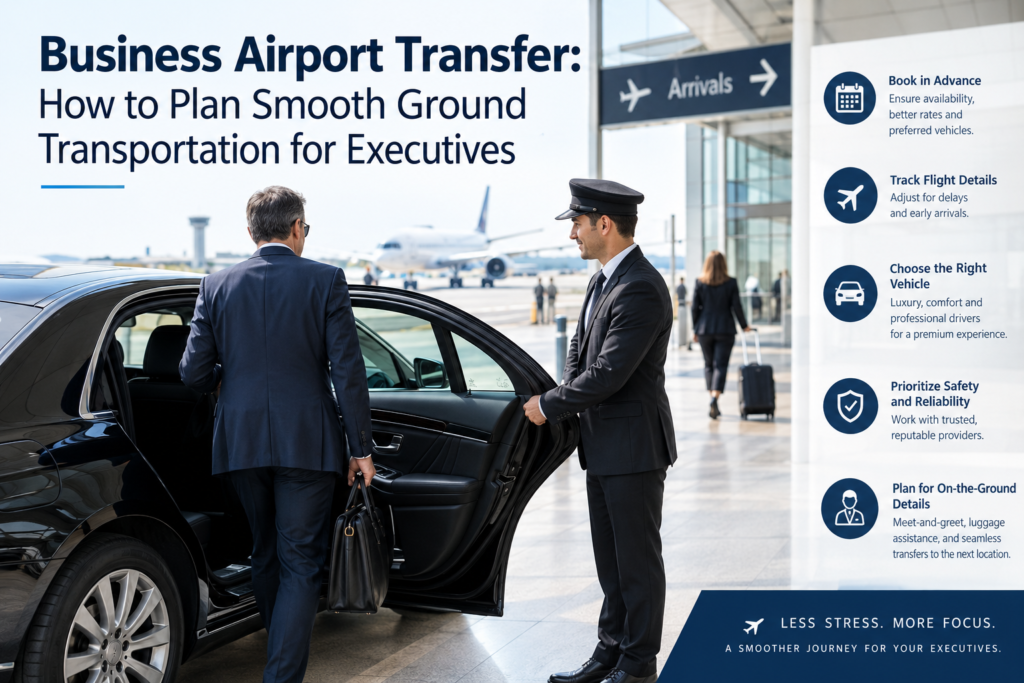
A business trip does not begin when an executive enters the meeting room. It begins when the traveller lands, collects their luggage and needs to reach the next destination on time. That first ground journey can shape the rest of the day. A clear pickup plan can make the arrival feel calm and organised. An uncertain transfer can create avoidable stress, delay preparation and leave a poor first impression of the destination. This is why a business airport transfer should be treated as part of corporate travel planning—not as a last-minute transport booking. With the right information, communication and service standards, companies can make airport-to-hotel and airport-to-meeting journeys more comfortable, discreet and dependable. This guide explains how executives, travel managers and delegation coordinators can plan business airport transfers effectively. Key Takeaways •A business airport transfer should be planned around the traveller’s schedule, luggage, destination and communication needs. •Clear pickup instructions and one responsible point of coordination reduce confusion after arrival. •Ground transportation is an important part of business travel experience, duty of care and meeting readiness. •The right provider should be assessed for communication, professionalism, privacy, flexibility and service fit—not only price. Why Does a Business Airport Transfer Matter? A business airport transfer connects several important parts of a corporate journey: the flight, accommodation, meetings, local travel plan and return departure. When the transfer is well coordinated, the traveller can move from arrival to the next commitment without making unnecessary decisions under pressure. Ground transportation is also one of the moments when business travellers are most exposed to uncertainty in an unfamiliar city. A 2026 Global Business Travel Association study of 1,200 business travellers across six Southeast Asian markets found that 32% identified navigating transportation in unfamiliar places as the most stressful aspect of a business trip. The study also reported that 78% relied on ground transport for airport-to-hotel transfers and 71% used it to reach offices or client sites. Global Business Travel Association study The exact experience will vary by destination and traveller. However, the underlying lesson is broadly useful: airport transfers deserve deliberate planning because they influence comfort, time management and confidence during the trip. [INTERNAL-LINK: corporate travel services → Fiaara corporate service page] What Should Be Planned Before Booking an Airport Transfer? The most reliable transfer begins with complete and accurate information. Before contacting a provider, the traveller or travel coordinator should prepare the following details. 1. Flight information Share the airline, flight number, arrival date and expected arrival time. If the provider offers flight monitoring or arrival coordination, confirm how that process works rather than assuming it is included. For international arrivals, also consider immigration, baggage collection and airport exit time. The transfer should be planned around the complete arrival process, not only the scheduled landing time. 2. Final destination Provide the full name and address of the hotel, office, residence or meeting venue. If the destination has multiple entrances, reception areas or access instructions, share the most useful arrival point. For a business delegation, list each destination in the correct order. A simple route sequence can help prevent confusion when several passengers have different schedules. 3. Passenger and luggage requirements Confirm the number of travellers, luggage quantity and any special requirements. A business traveller with presentation materials, samples or equipment may need a different arrangement from a traveller carrying only hand luggage. Do not assume that a standard transfer will suit every group. The appropriate vehicle and service arrangement should be confirmed based on the provider’s actual availability and operating area. 4. Communication preferences Agree on the preferred communication channel before arrival. This may be email, phone, WhatsApp or another approved method. The traveller should know whom to contact if they cannot immediately locate the pickup point. Clear communication is particularly important when the traveller does not speak the local language or is arriving late at night. 5. Schedule and meeting priorities If the traveller has a meeting shortly after arrival, share that context during planning. A realistic transfer plan should leave time for airport exit, luggage, traffic conditions, check-in or preparation where relevant. Avoid creating a schedule that depends on the shortest possible journey time. The objective is not simply to move quickly; it is to arrive prepared and composed. How Can Companies Reduce Airport Transfer Stress? The best way to reduce travel friction is to remove avoidable decisions from the arrival experience. A corporate travel coordinator can do this by creating a simple, repeatable process. Use one clear point of contact The traveller, host organisation and transport provider should know who is responsible for coordination. Multiple unconnected contacts can create confusion, especially when a flight time changes or a passenger cannot find the pickup point. Send practical instructions before departure Provide the traveller with the confirmed pickup details, contact information, destination and any relevant instructions before they board the flight. Keep the message concise and easy to access on a phone. Separate confirmed details from assumptions A good travel brief should distinguish between confirmed information and matters that may change. For example, a scheduled flight arrival is not the same as a guaranteed exit time from the airport. Plan for reasonable flexibility Travellers may face delays, longer baggage collection or a change in meeting plans. Ask the provider how updates are handled and what the traveller should do if the planned schedule changes. Keep the arrival experience professional The first interaction after landing matters. Clear identification, respectful communication, luggage assistance where agreed and a calm transfer process can help the traveller transition into the business visit. [IMAGE: Business traveller arriving at an airport and meeting a professional transfer coordinator] Business Airport Transfer and Executive Time Management Executive travel is often built around narrow windows. A meeting may be scheduled soon after arrival, or several appointments may take place across different parts of a city. In this setting, airport ground transportation should be integrated into the itinerary rather than treated as a separate task. A practical executive travel plan should include: •Arrival processing
Employee Transportation Services: A Guide for HR Leaders
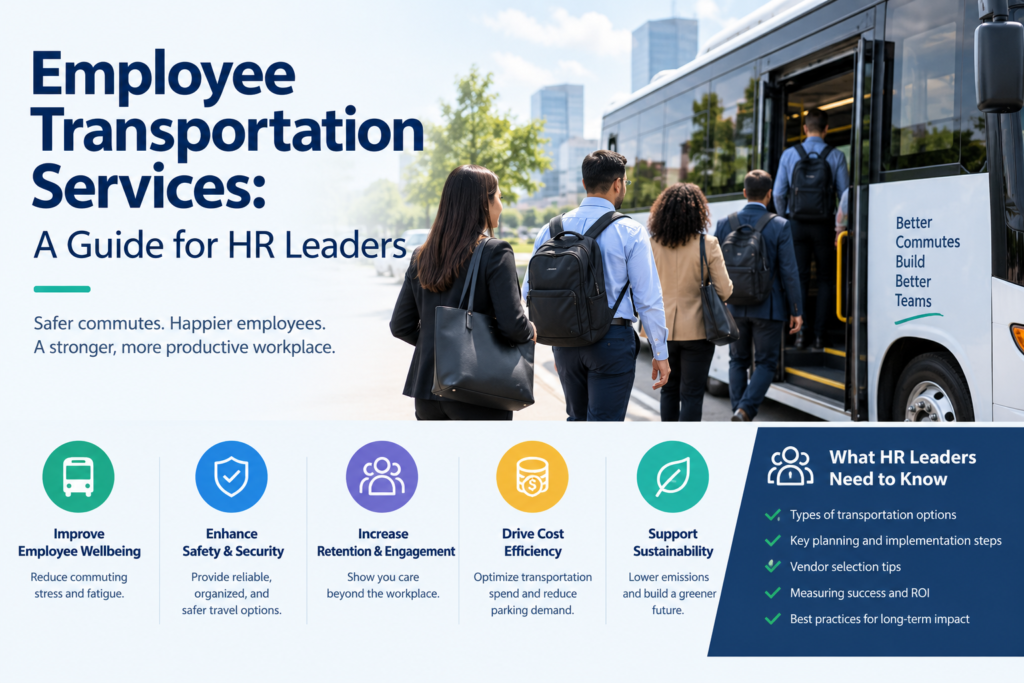
For many organisations, the employee commute is not a minor operational detail. It affects punctuality, attendance, workforce access, employee experience and the way people begin and end their working day. As workforces become more distributed and business hours become more varied, employee transportation services can give HR leaders a structured way to support daily mobility. The right approach is not simply to arrange vehicles. It is to design a safe, dependable and clearly governed transport experience that fits the organisation’s workforce, locations, schedules and policies. This guide explains what employee transportation services include, why they matter to HR leaders, how to evaluate a provider and which questions should be answered before implementation. Key Takeaways •Employee transportation services can support punctuality, access to the workplace and a more predictable employee experience. •A successful programme starts with employee travel patterns, work schedules, pickup requirements and safety expectations. •HR leaders should assess coordination, driver and vehicle standards, communication, privacy, incident processes and reporting before selecting a partner. •Transport should be treated as part of workforce experience and corporate mobility—not only as a vehicle-booking exercise. What Are Employee Transportation Services? Employee transportation services are organised mobility solutions that help employees travel between agreed pickup points, residential areas, offices, business facilities or other approved locations. Depending on the organisation, the service may support daily commuting, shift movement, late-hour travel, office transfers, business visits or specific workforce groups. The exact model can vary. It may involve scheduled routes, point-to-point movement, pooled transport, dedicated vehicles, employee shuttles or individually coordinated journeys. The most suitable option depends on factors such as workforce size, office locations, shift patterns, distance, budget, local transport conditions and company policy. For HR teams, the central question is not only, “Can employees reach the office?” It is also: Can the organisation provide a consistent, well-coordinated and responsibly managed travel experience that supports both employee needs and business requirements? [INTERNAL-LINK: corporate transportation services → Fiaara corporate service page] Why Should HR Leaders Pay Attention to Employee Transportation? Employee transportation sits at the intersection of people operations, facilities, administration, finance, safety and business continuity. A poorly organised commute can create recurring friction, while a well-designed programme can make workplace access more predictable. 1. It can support punctuality and schedule reliability When employees depend on inconsistent or limited public transport, arrival times may be difficult to predict. A coordinated transport programme can create clearer departure windows and planned movement between designated points. This is especially relevant for organisations with fixed start times, multiple shifts, early-morning operations, late working hours or offices located away from major public transport routes. Transportation does not eliminate every delay, but it can give the organisation a more structured way to plan and communicate daily movement. 2. It can improve the employee experience The workday begins before an employee enters the office. Long or uncertain commutes can affect energy, stress and the overall perception of the employer. A comfortable, respectful and clearly communicated transport service can remove some avoidable friction from the daily routine. HR leaders should avoid treating convenience as a luxury. For many employees, especially those travelling at unusual hours or across difficult routes, access to practical transport can influence how manageable the job feels. 3. It can support workforce access Transport can be a consideration in recruitment and retention, particularly when an organisation operates in an area that is difficult to reach or requires attendance outside standard hours. An employer-supported commute may help more employees consider a role that would otherwise be challenging to access. The result should not be presented as a guaranteed hiring or retention outcome. Instead, HR teams should evaluate whether transportation solves a real access problem for their workforce and whether employees value the proposed service. 4. It can strengthen operational coordination A centralised transportation process can give HR and administration teams a clearer view of routes, schedules, employee communication and service issues. This is often more manageable than handling informal travel arrangements across multiple teams. A transport programme should have defined ownership. HR may lead the employee experience, facilities may manage locations, finance may review cost and procurement may assess vendors. Clear responsibility prevents gaps when a route changes or an incident needs attention. What Should an Employee Transportation Programme Include? A strong programme is built around more than a route map. It should include the operating principles, communication process and service standards that make the daily journey dependable. Workforce and route assessment Begin with data and employee input. Understand where employees live, where they work, when they travel and which groups face the greatest access challenges. Useful information may include: •Office and facility locations. •Employee concentration by area. •Shift and roster timings. •Existing commute methods. •Common late-arrival or access concerns. •Accessibility requirements. •Preferred pickup points and reasonable walking distances. •Seasonal or occasional demand. Do not assume that a single route model will suit every workforce. A hybrid approach may be more appropriate for organisations with different shifts, locations or employee populations. Scheduling and coordination Employees need clear information about pickup windows, meeting points, service changes and escalation contacts. The schedule should be practical rather than overly ambitious. It should include appropriate time allowances and a process for communicating changes. A reliable service is not defined only by speed. It is also defined by predictability, clarity and the ability to respond professionally when circumstances change. Safety and responsible operations Safety should be a core evaluation category, not an afterthought. HR leaders should ask how a prospective partner manages vehicle condition, driver standards, route planning, passenger communication, emergency escalation and incident reporting. The applicable legal and operational requirements will vary by location and service model. Employers should obtain independent legal, insurance and compliance advice where needed, and confirm that the selected provider can meet the organisation’s own standards. The U.S. Department of Labor notes that travel during normal working hours may be treated differently from ordinary home-to-work travel under U.S. wage-and-hour rules. This is a reminder that transport policy can have employment-law implications depending on
BRICS Summit 2026 New Delhi: Travel & Logistics Guide
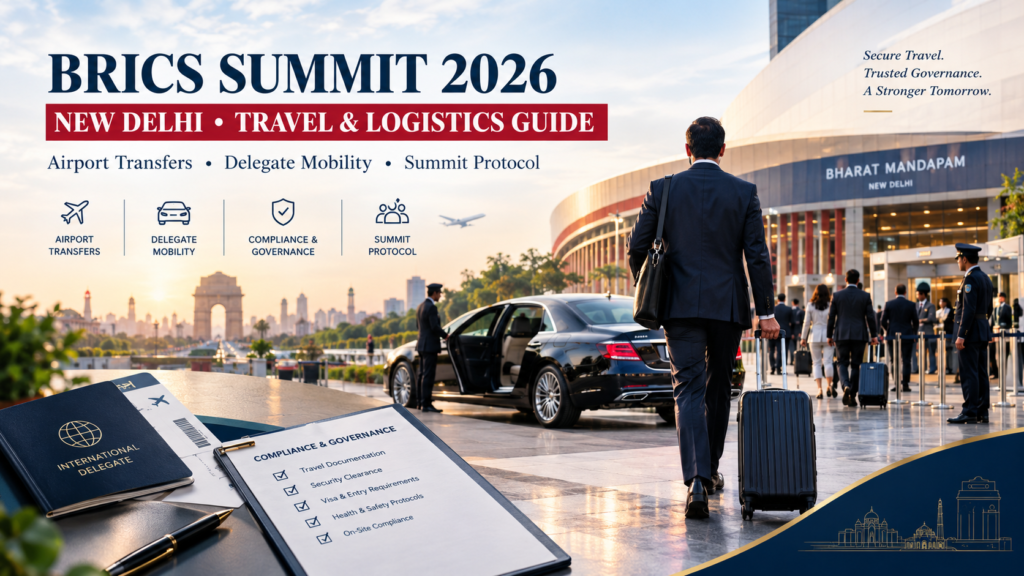
BRICS Summit 2026 in New Delhi: A Travel and Logistics Guide for Delegates India will host the 18th BRICS Summit on 12–13 September 2026 at Bharat Mandapam in New Delhi. For government representatives, business leaders, corporate teams and international delegates, the summit is more than a two-day event. It is part of a wider programme of meetings, conversations and business opportunities that requires thoughtful travel planning. A successful visit depends on more than reaching Delhi. Delegates also need a practical plan for airport arrival, accommodation transfers, meetings, time buffers, privacy and moments of cultural discovery. When every transition is planned carefully, business travellers can focus on their objectives while moving through the city with greater comfort and confidence. Key Takeaways BRICS Summit 2026: Dates, Venue and Theme The 18th BRICS Summit 2026 will take place on 12–13 September 2026 at Bharat Mandapam, New Delhi, according to the India Trade Promotion Organisation and the official BRICS India 2026 website. India’s chairship is guided by the theme “Building for Resilience, Innovation, Cooperation and Sustainability.” The official BRICS India 2026 platform describes four key pillars for the chairship: resilience, innovation, cooperation and sustainability. The programme reflects a people-centric, “Humanity First” approach to international cooperation. BRICS brings together major emerging markets and developing countries. The official BRICS India 2026 website lists eleven member countries: Brazil, China, Egypt, Ethiopia, India, Indonesia, Iran, Russia, Saudi Arabia, South Africa and the United Arab Emirates. The summit is therefore expected to bring together a diverse group of leaders, officials, business representatives and partner-country participants. For visitors, the significance of the event is clear: New Delhi will become an important meeting point for international diplomacy, business conversations and cross-border collaboration. Why Travel Logistics Matter During a Global Summit During a high-level summit, the quality of the travel plan can directly influence a delegate’s day. Meetings may be scheduled close together, arrival times may change and several journeys may need to be coordinated across the city. A practical logistics plan should account for: This does not mean trying to predict every possible disruption. It means building a travel plan that is realistic, clearly communicated and adaptable. Delegates should also follow all official instructions issued by summit organisers, relevant authorities and their host organisations. Airport Transfers for BRICS Delegates The first journey often sets the tone for the entire visit. After a long international flight, delegates generally benefit from a pre-arranged airport transfer rather than having to organise transport after landing. Before arrival, travellers or their coordinators should confirm: Sharing accurate flight information helps the travel team prepare the arrival plan. It is also useful to keep the airport-to-accommodation journey simple, with one clear point of contact and all essential details available before departure. Fiaara can assist travellers in enquiring about planned airport transfers in New Delhi, subject to service area, availability and the specific requirements of the journey. The objective is a calm transition from arrival to the next stage of the itinerary. Planning Executive Movement Around New Delhi Business travel during a major summit requires more than a list of destinations. It requires an itinerary that respects time, distance, meeting priorities and the need for breathing room between commitments. A well-prepared executive travel plan should include: Delegates should avoid creating schedules that leave no margin between meetings. A short buffer can make the difference between arriving composed and arriving under pressure. The final itinerary should always be checked against current instructions from the event organiser and relevant authorities. For corporate leaders and delegation coordinators, a professionally managed movement plan also supports the wider business experience. Punctuality, discretion and clear coordination contribute to how a delegation is received and remembered. Combining Business Meetings with a Meaningful Delhi Experience A summit visit can be demanding, but it does not have to be limited to conference rooms and hotel corridors. When time allows, a thoughtfully planned city experience can help international visitors understand New Delhi beyond its formal agenda. Delhi offers a rich combination of history, architecture, food, art and living culture. However, a short business trip does not call for an exhausting sightseeing schedule. A more considered approach is to choose a small number of meaningful experiences and place them around the delegate’s confirmed commitments. Examples may include: Fiaara’s city tour and business tour services can be discussed as part of a wider itinerary, subject to the traveller’s schedule and requirements. The emphasis is on comfort, privacy and cultural authenticity rather than trying to cover everything in a single visit. A Practical Pre-Arrival Checklist for Delegates Preparation is particularly valuable when travelling for a high-profile international event. Use the following checklist before departure: Confirm the essentialsKeep flight details, accommodation information, meeting addresses and emergency contacts in one accessible place. Share the relevant information with the person responsible for travel coordination. Arrange airport movement earlyDo not leave the first transfer until the last minute. Enquire about the service, share the arrival details and confirm the booking channel in advance. Build time buffersAllow practical time for each movement. Avoid assuming that every journey will take exactly the minimum possible time. Clarify communicationConfirm whether updates should be shared by email, phone, WhatsApp or another agreed channel. A clear communication process helps avoid confusion when plans change. Protect privacyBusiness travellers should share sensitive itinerary details only with the relevant people and use a travel partner that understands the importance of discreet, respectful service. Keep the itinerary adaptableSummit-related schedules may be subject to organiser instructions. Treat the itinerary as a coordinated plan that can be updated when necessary, not as a fixed promise that cannot change. Plan personal time realisticallyIf you want to experience Delhi, identify the available time first. Then select an experience that fits the schedule instead of overloading the itinerary. How Fiaara Supports a More Considered Business Travel Experience For international visitors and corporate travellers, Fiaara is positioned as a discreet and dependable travel and logistics partner. The focus is on three practical aspects of the journey: ComfortA well-planned journey reduces unnecessary
BRICS Summit Taxi Service in Delhi Airport, Hotel and Summit
BRICS Summit Taxi Service in Delhi: 24/7 Airport, Hotel and Summit Transfers If you are travelling to Delhi for a BRICS Summit, reliable ground transportation should be arranged before your flight lands. FIAARA provides a 24/7 taxi service in Delhi NCR for airport pickup, hotel transfers, summit-related movement, corporate meetings, dinners, city visits and return airport drops. The fleet can be arranged across practical and premium categories, from XUVs and SUVs to executive sedans and luxury cars, subject to availability and booking requirements. For international delegates, business guests and accompanying teams arriving from Russia, China and other countries, pre-booking is more convenient than searching for a taxi after landing. FIAARA’s airport-transfer service highlights professional chauffeurs, terminal meet-and-greet, flight tracking, fixed pricing and support for Delhi NCR transfers. Key Takeaways •Book one coordinated taxi service for airport pickup, hotel-to-summit travel, meetings and airport drop-off. •Choose an XUV, SUV, executive sedan or luxury vehicle according to passenger count, luggage and protocol requirements. •Use hourly rental or point-to-point transfers when your schedule includes meetings, official dinners or multiple venues. •Share your arrival details, hotel, passenger count and preferred vehicle in advance so the team can plan the movement smoothly. Why Pre-Book a BRICS Summit Taxi Service in Delhi? A major international summit typically involves a tight itinerary: airport arrival, hotel check-in, summit venue movement, business meetings, meals and departure. A last-minute cab search can make that schedule harder to manage, particularly when delegates are unfamiliar with Delhi traffic, airport terminals and local routes. A pre-booked BRICS Summit taxi service in Delhi gives you one point of coordination for the complete journey. You can provide the flight number, pickup terminal, hotel address, meeting locations, number of passengers, luggage requirements and preferred vehicle category before arrival. FIAARA’s airport page describes real-time flight tracking, terminal meet-and-greet and 24/7 global support as part of its airport-transfer positioning. The right service is not only about moving from one address to another. It should also make the itinerary easier to manage. For example, a delegate may need airport pickup in the morning, hotel-to-venue transfer, a return ride to the hotel, a vehicle for an evening meeting and a scheduled airport drop the next day. A single booking plan can reduce repeated coordination and help keep the transport schedule clear. Airport to Hotel Taxi Transfer for BRICS Summit Delegates For most international visitors, the first requirement is a dependable Delhi airport to hotel taxi. FIAARA’s airport transfer service supports pickup and drop from IGI Airport Terminals 1, 2 and 3, with professional chauffeurs and a booking form that captures pickup address, destination, travel date, time and passenger count. When making a reservation, share the following information: Booking detail Why it matters Airline and flight number Helps the transport team coordinate the airport pickup and respond to flight changes. Arrival terminal Delhi Airport has multiple terminals, so the exact terminal reduces confusion after landing. Hotel name and complete address Helps the chauffeur plan the correct destination and entrance point. Passenger and luggage count Supports the selection of an appropriate sedan, SUV, XUV or larger vehicle. Language or assistance preference Helps the team understand any communication or meet-and-greet requirement in advance. Return flight details Makes it easier to plan the hotel-to-airport journey with appropriate buffer time. For Russian and Chinese delegates, it is useful to send the booking information in English along with the hotel confirmation or map pin. If your delegation needs special language assistance, request it while booking rather than assuming it is included. Vehicle availability, chauffeur assignment and any special support should be confirmed directly with FIAARA before payment or travel. For a dedicated airport booking, visit the Delhi Airport Taxi Service page. Hotel to Summit Venue Transfers Without Daily Travel Stress The second important journey is the hotel-to-summit venue transfer. Delegates may need to reach the venue at a fixed time, return to the hotel between sessions or travel to a business meeting after the summit programme. A point-to-point transfer is suitable when you know the exact pickup and drop locations. An hourly booking can be more practical when the vehicle needs to remain available during a changing schedule. FIAARA’s city-transfer service describes both door-to-door point-to-point transfers and hourly rental packages. It also positions hourly rentals for business meetings and city exploration, allowing travellers to retain the vehicle for a defined period rather than arranging a separate cab for every movement. Before the summit period, confirm the following with your transport coordinator: 1.The hotel lobby or designated pickup point. 2.The venue entrance or delegate drop-off point. 3.The required reporting time and desired arrival buffer. 4.Whether the chauffeur should wait during the meeting or return later. 5.Whether the vehicle will be used for one delegate, a small team or a larger group. 6.Any access, security or route instructions communicated by the event organiser. Traffic conditions and access controls can change during major events. Therefore, the booking should allow reasonable travel time, and the final route should be reconfirmed closer to the journey date. FIAARA can confirm the operational details that apply to your specific booking. XUV, SUV and Luxury Car Options for Delegates and Teams Different summit visitors have different transport needs. A solo executive with one suitcase may prefer an executive sedan. A small delegation with multiple bags may need an SUV or XUV. A VIP guest, senior executive or diplomatic-style business visitor may request a luxury car, subject to availability and confirmation. FIAARA’s corporate service page lists executive sedans, luxury vehicles and premium SUVs among its corporate travel options. The page also gives examples such as Honda City, Toyota Camry, Mercedes E-Class, BMW 5 Series, Toyota Innova Hycross and Kia Carnival. These examples should be treated as indicative categories rather than a guaranteed vehicle assignment; the exact model should be confirmed when booking. Requirement Recommended category to request One or two passengers with light luggage Executive sedan Delegates with larger luggage or extra comfort needs SUV or XUV Small team travelling together Premium MUV or larger
5 Key Pre-Booked Airport Transfer Benefits for Stress-Free Travel
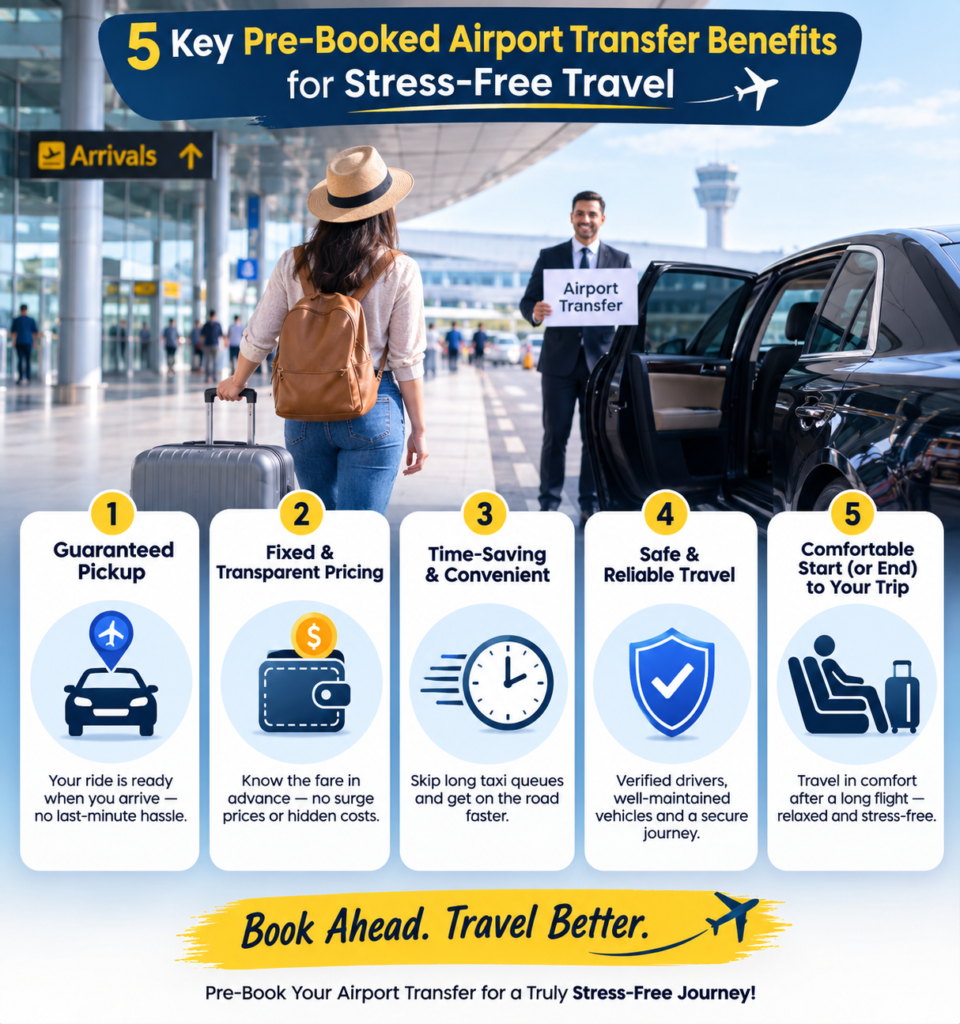
5 Benefits of Pre-Booking Your Airport Transfer The transition from a high-altitude flight to a crowded airport terminal is often the most demanding segment of a journey. After hours of travel, the last obstacle is securing reliable transportation. While on-demand taxis and rideshare apps are common, they introduce uncertainty that can disrupt a carefully planned itinerary. Choosing to arrange transportation in advance offers a structured alternative that prioritizes reliability and passenger comfort. This guide examines the five primary pre booked airport transfer benefits and how they contribute to a more efficient travel experience. For many, the appeal of a pre-arranged service is the elimination of the “arrival gamble.” In busy hubs, demand often outstrips supply, leading to long queues and unpredictable waiting times. A pre-booked service ensures a vehicle and a professional chauffeur are allocated specifically to a passenger’s arrival, transforming a potentially chaotic exit into a seamless transition. As a premium provider, Fiaara offers a structured approach to airport arrivals that combines operational excellence with passenger safety [1]. 1. Guaranteed Availability and Peace of Mind The most immediate of the pre booked airport transfer benefits is the guarantee that a vehicle will be available. Local transport demand is sensitive to weather, local events, and flight clusters. Relying on an on-demand app during a storm or a major conference often results in significant delays. Pre-booking removes this variable, providing certainty that transport is secured well before departure. This is particularly valuable for off-peak hours or late-night flights. While airport taxi ranks are generally operational 24/7, the quality and availability of vehicles can fluctuate. A pre-booked arrangement with a provider like Fiaara ensures a professionally maintained vehicle is ready regardless of the hour [1]. Because the service is pre-arranged, the chauffeur is already briefed on the destination, allowing the passenger to settle in without logistical discussions. Beyond availability, pre-booking allows for a higher standard of service coordination. The provider can allocate the most appropriate vehicle, ensuring it meets specific comfort and safety requirements. This proactive allocation is a cornerstone of Fiaara’s premium transport offering, which emphasizes background-checked chauffeurs and luxury vehicles [1]. By securing these details in advance, travellers can focus on their objectives rather than managing local logistics. 2. Streamlined Arrival and Meeting Point Coordination Navigating a large international airport can be daunting. A practical benefit of pre-booking is the inclusion of a coordinated meeting point or “meet-and-greet” service. Instead of searching for a distant taxi rank, passengers are met by a chauffeur at a designated location, often just outside the arrivals hall. Fiaara’s airport transport service [2] manages these terminal logistics effectively, providing a visible presence that helps passengers identify their driver quickly. This service often includes a personalized name board and luggage assistance, reducing the mental load of navigating a busy environment. Establishing a clear meeting plan avoids the common frustration of missed connections and terminal confusion. Furthermore, pre-booked services allow for real-time flight monitoring. Many premium services use flight tracking to adjust pickup times automatically if a flight is delayed or arrives early. This ensures the chauffeur is present exactly when needed, eliminating the stress of coordinating a new pickup time while in transit. For travellers arriving after a long flight, walking directly to a waiting vehicle is a significant comfort that justifies advance planning. 3. Tailored Vehicle Selection for Luggage and Groups On-demand services often lack control over vehicle type. A significant benefit of pre-booking is selecting a vehicle that matches the passenger count and luggage volume. Whether a traveller requires a sedan for a solo business trip or a large SUV for a family, pre-booking ensures the right car is dispatched. For families with strollers and multiple suitcases, a standard sedan is often insufficient. Similarly, corporate teams with equipment require vehicles that accommodate both people and cargo. By reviewing Fiaara’s fleet options in advance, travellers can secure a vehicle with the necessary space [1]. This tailored approach prevents the stress of trying to fit oversized luggage into a small vehicle, which often requires booking a second car at the last minute. Pre-booking also allows for a specific standard of luxury. Travellers can select high-end models like a Mercedes E-Class, ensuring their transport reflects their professional standing. Fiaara’s premium fleet is maintained to a high standard, providing a consistent environment that on-demand services cannot always guarantee [1]. By selecting the vehicle category during booking, passengers ensure their journey is as comfortable as it is efficient. 4. Fixed Pricing and Financial Transparency Financial unpredictability is a frequent source of stress. Metered taxis are subject to traffic and route changes, while rideshare platforms employ surge pricing. A valued benefit of pre-booking is fixed, transparent pricing. When a booking is confirmed, the passenger receives a clear quote covering the base fare and fees, allowing for accurate budgeting. For corporate travellers, this transparency is a significant advantage. Fiaara’s corporate taxi service [3] enhances this by offering structured billing, including GST-compliant invoicing and detailed trip reports. These features allow finance departments to track spending with precision, reducing the administrative burden of processing receipts. By choosing a pre-booked service with a clear pricing model, businesses ensure travel costs remain predictable [3]. Fixed pricing also provides security against unscrupulous practices in unfamiliar cities. Travellers who haven’t pre-booked may be vulnerable to inflated rates. A pre-arranged service with a reputable provider like Fiaara establishes a professional contract from the outset, ensuring fair and transparent charges [3]. This clarity is vital for international visitors unfamiliar with local currency or standard taxi rates. 5. Seamless Business and Onward Travel Coordination For professional travellers, the airport transfer is rarely the final step. Often, arrival is followed by meetings or social engagements. A strategic benefit of pre-booking is integrating the airport pickup into a broader city travel plan. Travellers can arrange for a chauffeur to remain at their disposal, ensuring they move between locations without re-booking. This coordination is beneficial for executives with demanding schedules. Fiaara’s city transfer service [4] allows for point-to-point travel and hourly rentals,
8 Reasons to Invest in a Corporate Cab Service
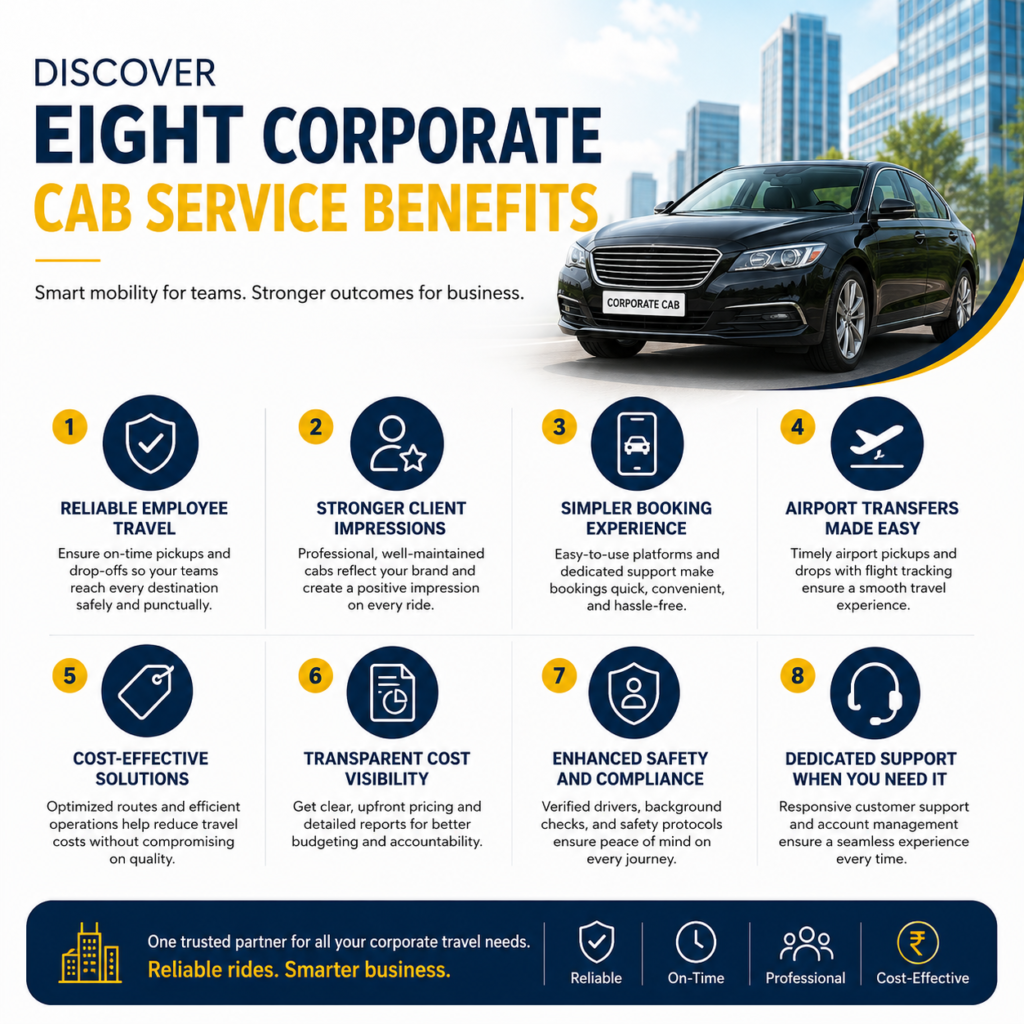
8 Reasons to Invest in a Corporate Cab Service Business transport is not simply about travelling between two addresses. An employee may be heading to an early meeting, a client may be arriving after a long flight, or a leadership team may need to move between locations on a demanding schedule. In every case, the travel experience influences punctuality, comfort, coordination, and the impression your organisation creates. That is why the best corporate cab service benefits extend beyond a vehicle and driver. A planned transport arrangement can support employees, visitors, candidates, and client-facing teams while giving operations a clearer way to coordinate business travel. The right service helps the journey fit the workday instead of forcing the workday to fit uncertain transport. Corporate Cab Service Benefits at a Glance Business need How a corporate cab service can help Punctual business travel Confirmed pickups and a defined point of contact reduce last-minute coordination. Client and guest experience A planned airport or office transfer creates a more organised arrival. Booking visibility A clear process makes journeys easier to arrange and review. Flexible travel Transport can be planned around airport, city, event, and recurring employee journeys. 1. It Helps Protect Employee Time and Focus Employees often travel around busy workdays. They may need to prepare for a presentation, take a call before a meeting, or arrive composed for a client conversation. Repeated ride-hailing searches, uncertain pickups, and last-minute route changes can take attention away from that work. A corporate cab service adds structure. When the pickup time, location, vehicle needs, and contact process are agreed in advance, the traveller has fewer transport decisions to manage. This is particularly useful for senior leaders, client-facing teams, visiting employees, and people moving between several appointments. For a related view on executive travel, read . 2. It Creates a More Reliable Client Arrival When a client, candidate, partner, or visiting executive arrives in a new city, the transfer is part of the welcome. An unclear meeting point or a missed pickup can create friction before the business conversation has even begun. A confirmed business transfer makes the arrival feel planned rather than improvised. Reliability is built through simple details: accurate itinerary information, a suitable pickup window, a defined meeting point, and a practical way to communicate changes. It is less about grand gestures and more about delivering the essentials consistently. Fiaara discusses this principle in . 3. It Supports a More Consistent Service Standard Ad hoc transport bookings can vary from one trip to the next. The vehicle category may change, pickup instructions may be unclear, and travellers may need to repeat the same requirements each time. A corporate arrangement gives the business an opportunity to define a more consistent travel standard. That standard might cover vehicle preferences, passenger and luggage information, driver communication, and procedures for airport or office pickups. Service quality also depends on the people behind the journey, especially when an itinerary changes or a traveller needs assistance. Explore this human side of transport in . Fiaara describes its company approach and service standards around premium ground travel, professional chauffeurs, and corporate mobility. Confirm the exact services and terms that apply to your own business requirements before booking. 4. It Simplifies Booking and Travel Coordination Multiple individual bookings can create unnecessary work. Employees may use different channels, itinerary updates may be scattered across messages, and the organiser may not know whether the pickup has been confirmed. A corporate cab service can create a clearer process for planned journeys. A business may designate an authorised booking contact, ask for essential trip details at the time of request, and provide one confirmation path for the passenger and organiser. This is useful for recurring employee travel, executive meetings, conferences, and visitor pickups. For an additional perspective, see . 5. It Makes Airport Transfers Easier to Plan Airport travel involves more coordination than a typical city ride. Flight details, terminals, luggage, meeting instructions, and possible delays all need consideration. For a company sending employees on business travel or welcoming visitors, a missed or confusing airport transfer can disrupt the day’s entire schedule. A planned corporate cab service records the information that matters before the journey starts: flight number, passenger contact, arrival date, luggage needs, and the agreed meeting procedure. Fiaara’s airport transport service presents airport pickup and drop-off information for Delhi NCR. Before travel, confirm the service-specific pickup, waiting, and flight-delay terms that apply to the booking. 6. It Works Better for Multi-Stop City Days Business days rarely follow a single route. A professional may have an office meeting in the morning, a client visit after lunch, and an event in the evening. A team may need to travel together between a hotel, conference venue, and business district. Treating every leg as an unplanned booking can make the day harder to manage. Corporate transport can be planned around the real itinerary through point-to-point journeys, scheduled pickups, or a vehicle arranged for a multi-stop day. Fiaara’s city transfer service outlines point-to-point and hourly city-travel options, including business-meeting use cases. Discuss the route, duration, passenger count, and special requirements before confirming the journey. 7. It Improves Travel Cost Visibility When employees make separate bookings through different channels, travel costs can be scattered across receipts, payment methods, departments, and reimbursement requests. This does not necessarily make the trips inappropriate, but it can make planning and review more difficult. An organised corporate cab arrangement lets the company define how bookings are requested, which information is recorded, and which costs should be confirmed in advance. Clear quotations, booking confirmations, and journey records help the business understand its transport activity without complicating the passenger experience. Ask how waiting, parking, tolls, and route changes are communicated—not just what the first quoted figure is. 8. It Supports Comfort, Safety, and Professionalism Travel comfort matters after late flights, before high-stakes meetings, and during long days on the road. A suitable vehicle, clear pickup communication, considerate driving, and a well-presented journey can make business travel more manageable
Flight Delayed? What Happens to Your Airport Pickup?

Flight Delayed? What Happens to Your Airport Pickup? After a long flight, the last thing most travellers want is uncertainty at the airport. You have landed later than planned, your phone is low on battery, baggage is taking time, and one question becomes urgent: will my airport pickup still be there? The answer depends on the booking terms and the provider’s airport pickup flight delay policy. Some airport transfer services track flight information and adjust collection timing; others require the passenger to notify them of changes. Some include a set waiting period, while others apply additional waiting or parking charges after a stated grace period. The important point is that a flight delay does not have to become a transport problem when the pickup plan is clear from the start. This guide explains what a good airport pickup flight delay policy should cover, what you should do if your flight is late, and how to book airport transport with less stress. Why Flight Delays Affect Airport Pickup Plans An airport transfer is scheduled around an expected arrival time, but an aircraft landing is only one part of the journey. Passengers may still need to taxi to the gate, pass through immigration, collect checked bags, clear customs, and reach the agreed meeting point. A flight delay can change each of those stages. For the transport provider, the delay affects driver scheduling, vehicle access, airport waiting rules, and the next journey on that driver’s route. For the passenger, it affects whether they need to contact the provider, how long the driver can wait, and whether there will be an extra charge. That is why a well-written airport pickup flight delay policy is about more than timing. It sets expectations for communication, availability, and cost. A reliable airport pickup plan is built on three essentials: accurate flight details, a clear meeting point, and a simple way to communicate changes. What Should an Airport Pickup Flight Delay Policy Include? Every provider has its own terms, so you should always check the conditions attached to your specific booking. However, a clear policy usually explains the following points. Policy area What you should look for Why it matters Flight information Whether you need to provide a flight number and arrival date It helps connect the booking to the correct itinerary. Delay communication Whether flight tracking is used and when the passenger must make contact It prevents assumptions if plans change. Waiting time The period covered after landing or the scheduled pickup time It clarifies how much flexibility is included. Additional charges When waiting, parking, or access charges may apply It makes possible costs visible before travel. Meeting instructions The exact terminal, pickup zone, or meet-and-greet process It avoids confusion after arrival. Cancellation or no-show terms What happens if the passenger cannot travel or cannot be reached It protects both the passenger and the provider. The best policy uses plain language. It should not leave you guessing whether “flight monitored” means the driver waits indefinitely, or whether “pickup included” covers terminal parking. Read the booking confirmation and ask any questions before travelling. A small clarification before departure can prevent a difficult conversation after landing. What to Do When Your Flight Is Delayed 1. Check the booking confirmation first Your confirmation should contain the booking reference, flight details, contact information, and meeting instructions. Check how it treats delays, waiting time, and changes before you travel. 2. Notify the provider when you can Do not assume that every airport pickup service will automatically know about a delay. Send a short update with the booking reference and revised arrival time when you can. For a delayed flight taxi pickup, accurate information lets the provider explain the most practical next step. 3. Keep your flight number and phone available Your flight number is more useful than a general message saying that you are running late. Keep your phone switched on after landing where possible. A charged phone, a power bank, and access to Wi-Fi can make coordination much easier. 4. Follow the agreed meeting instructions Follow the collection instructions in your booking rather than heading to a random exit. Airports often have separate zones for private cars, pre-booked vehicles, and taxis. Contact the provider if you cannot find the driver or meeting point. Common Flight Delay Scenarios and the Best Response If your flight is delayed before take-off, update the airport pickup service as soon as you receive the revised timing. If you land late without making contact, send your booking reference, flight number, and current status as soon as you have a signal or Wi-Fi. When immigration or baggage collection is unusually slow, update the provider if you are likely to exceed the agreed pickup window. If a flight is cancelled or diverted, contact the provider promptly and ask whether the booking can be amended, postponed, or cancelled; share the new flight number and arrival date if you are rebooked. How to Book an Airport Pickup with Confidence The best time to address a potential delay is before the trip begins. Provide the full flight number, arrival date, contact number, and realistic luggage details. Ask these questions before confirming: 1.What is the airport pickup flight delay policy for my booking? 2.Do I need to contact the service if my flight is late? 3.What waiting time, if any, is included? 4.When could parking, airport access, or additional waiting charges apply? 5.Where exactly will I meet the driver? This gives you a dependable plan if a problem occurs. For more airport travel guidance, explore the . Airport Pickup Arrangements for Business Travellers and Guests Flight delays can be more complex when an organisation books for an employee, client, or guest. The booking should identify the traveller contact, company contact where needed, flight reference, and meeting instructions. The traveller should know who to call, while the organiser should know who can confirm an updated plan. This keeps the response organised and supports a professional arrival experience. What an Airport Pickup Provider Should
The Complete Guide to Taxi Fare Calculation: What You Actually Pay

The Complete Guide to Taxi Fare Calculation: What You Actually Pay When you need a ride, one question usually comes first: how much does a taxi cost? The answer does not always come down to a single number. Taxi operators usually calculate fares based on the route, travel time, pickup conditions, local access charges, vehicle size, and trip type. That is why a short journey in clear traffic can cost much less than the same distance during rush hour or from a busy airport terminal. Understanding taxi fare calculation helps you compare services fairly and avoid unexpected costs. It also helps you choose the right option for a local journey, an airport taxi, or a planned corporate taxi trip. This guide explains the main parts of a taxi fare, the factors that can change the final price, and the questions you should ask before booking. What Is Included in a Taxi Fare? Taxi operators generally calculate fares using several practical components. Exact rules vary by city and provider, but a clear quote or meter should show how the service calculates your fare. Fare component What it means What can affect it Base fare The starting charge for beginning the ride Local fare rules, service area, or vehicle category Distance charge The amount linked to kilometres or miles travelled The actual route taken Time charge The cost of slow-moving traffic or waiting time Traffic, roadworks, queues, and scheduled waiting Booking or pickup fee A fee for arranging your collection Phone, app, or advance-booking process Tolls and access fees Route or location-specific costs Toll roads, airport zones, parking, or terminal access Vehicle and trip extras Charges for specific travel requirements Larger vehicles, extra stops, or special requirements The most useful way to understand a fare involves two simple questions: what does the price include now, and what could increase it later? A low initial price may exclude tolls, airport collection fees, or additional waiting time. A slightly higher quote may offer better value when it already includes those costs. How Taxi Fare Calculation Works Traditional taxis often use a meter to calculate the fare. The meter starts with a base charge and adds costs as the vehicle travels. During smooth traffic, distance usually drives most of the cost. When traffic slows the vehicle down or the driver waits, time-based charges can increase the fare. Pre-booked taxi services may provide an estimated or upfront fare instead. This approach helps you understand the expected cost before you start your journey. It can prove especially useful for early flights, client meetings, corporate travel, or unfamiliar pickup locations. Before you confirm a booking, check whether the quote includes tolls, terminal charges, waiting time, route changes, and the vehicle you need. A transparent taxi fare should clearly explain three things: the starting price, the charges that may change, and how the provider will notify you if your journey changes. Neither metered nor pre-booked pricing always offers the better choice. A metered taxi can work well for a quick local trip. A pre-booked taxi can provide greater cost certainty when you need a specific pickup time, coordinated travel, or extra luggage space. The Four Factors That Most Often Change Taxi Cost Distance and route usually provide the starting point for fare calculation. However, the shortest road does not always provide the fastest journey. Traffic congestion, road signals, and road conditions can make a slightly longer route more efficient. When requesting a quote, provide the exact pickup point and destination. A terminal entrance, hotel entrance, or specific building works better than a general area name. Traffic and waiting time can increase the cost of a metered journey. Peak commuting hours, bad weather, roadworks, and major events can slow traffic and increase travel time. Pickup location and local charges can also affect the final fare. Airports, railway stations, hotels, and business parks may charge access or parking fees. Some locations may also limit where drivers can wait. Finally, vehicle size should match your passenger count and luggage requirements. Confirm these details before booking so the provider can assign the right vehicle and give you a more accurate quote. How Much Does an Airport Taxi Cost? An airport taxi may cost more than a standard city journey because airport travel can involve terminal access, parking, waiting time, flight tracking, and extra luggage. Instead of comparing only the headline price, ask what the fare includes. Check whether the provider includes flight monitoring, a specific meeting point, waiting time, airport charges, and tolls. Pre-booking also lets you confirm the vehicle and pickup arrangements before your journey. For more practical travel guidance, visit the Fiaara blog. What Does a Corporate Taxi Fare Include? A corporate taxi service can make business travel easier to manage. Businesses may use corporate taxi services for individual journeys, recurring employee transportation, client airport transfers, executive travel, or group events. The provider should calculate the fare according to the required timing, route, vehicle, waiting period, and coordination needs. For businesses, pricing clarity can matter just as much as the fare itself. Scheduled bookings, a clear contact process, and organized trip records can simplify travel for employees, visitors, operations, finance, and HR teams. Share the complete itinerary in advance so the provider can prepare a quote that matches your requirements. Metered Taxi vs Pre-Booked Taxi: Which Is Better Value? The better option depends on your journey. A metered taxi can suit an immediate local ride, while a pre-booked taxi can work better when you need a confirmed pickup time, clear fare terms, or a specific vehicle for passengers and luggage. Journey type Metered taxi may suit you when… Pre-booked taxi may suit you when… Local trip You need a ride immediately and the route is simple. You want a confirmed pickup or clear pricing terms. Airport transfer Your plans are flexible and you are travelling light. You need flight coordination, luggage space, or a planned meeting point. Business travel You need a one-off journey without extra coordination. You need reliability,
Reclaiming Valuable Time: The Mobile Office Advantage

Reclaiming Valuable Time: How Executive Airport Transfers Drive Corporate ROI Most executives spend somewhere between one and three hours a day in a car. That’s time spent staring at brake lights, white-knuckling through traffic, and hunting for parking spots. For someone earning north of $500K a year, those hours behind the wheel aren’t just annoying—they are expensive. We are talking about some of the highest-paid decision-makers in a company doing one of the lowest-value tasks imaginable. The math is simple. Every minute an executive spends driving is a minute they aren’t closing deals, prepping for meetings, or making the calls that move a business forward. And it’s not just about lost productivity. Driving in heavy traffic drains mental energy. You show up to that big client meeting already a little worn down, a little less sharp than you could be. This post breaks down how professional chauffeur services turn dead travel time into productive work hours. We will look at the real ROI behind executive transportation, how it reduces stress and sharpens focus, and why making the right first impression matters more than ever. Transforming Commute into a Productive Workspace The average executive spends anywhere from 60 to 90 minutes daily in transit. That’s valuable, irreplaceable time that could reshape business outcomes if redirected toward strategic thinking rather than steering through congested roads. When you hand over the wheel to a professional chauffeur, something remarkable happens: your commute stops being dead time. The backseat of a luxury vehicle transforms into a genuine extension of your office—minus the cubicle walls and coffee machine chatter. The Value of Environment This isn’t just about multitasking while someone else drives; the environment matters enormously. Executive chauffeur services create a controlled, quiet atmosphere where distractions fade away. No honking horns demanding your attention and no GPS recalculations interrupting your train of thought. Just you, your laptop, and the mental space to think clearly about what truly moves the needle for your business. Fiaara’s business tour services understand this dynamic perfectly. Our luxury vehicles come equipped with amenities designed specifically for working professionals who refuse to waste a single billable hour: Privacy shouldn’t be underestimated either. Confidential client calls that would be impossible on public transit become completely secure. You can rehearse a critical pitch presentation out loud or decompress after a challenging board meeting without maintaining a public facade. Strategic Time Management and Tangible ROI Here is the uncomfortable math every corporate leader eventually confronts: every minute spent navigating traffic jams is a minute not spent advancing company goals. Every second wasted searching for parking is revenue potential evaporating into thin air. Metric Driving Yourself Fiaara Chauffeur Service Time Value ($500K/yr Executive) $250+ / hour wasted 100% Reclaimed Work Time Mental Energy / Stress High (Cognitive Overload) Zero (Arrive Fresh & Focused) Productivity Level Zero (Hands on Wheel) High (Calls, Emails, Deck Prep) Arrival Condition Drained / Flustered Composed & Negotiation-Ready For high-level executives, the numbers tell a compelling story. Chauffeur service ROI typically lands between 300% and 600%. That isn’t marketing fluff—that is actual productivity reclaimed, measured in closed deals and strategic decisions made during what used to be wasted commute hours. Cognitive Load and Strategic Focus Professional drivers eliminate the cognitive burden of navigation completely. They know which routes flow smoothly at 3 PM versus 6 PM, anticipating construction delays long before traffic apps update. Your mental energy stays focused exactly where it belongs: on business objectives that generate real returns. The ripple effects extend far beyond simple time savings. High standards in ground transportation consistently reduce travel fatigue. You arrive at your destination mentally sharp rather than frazzled from combat driving. That sharpness translates directly into better negotiations, clearer thinking during strategy sessions, and smarter decision-making when stakes run high. When choosing a premium corporate cab service in Delhi NCR, performance depends heavily on arrival condition—not just arrival time. Seamless Transitions and Punctuality Punctuality isn’t just a professional courtesy in the executive world—it is currency. Miss a flight connection and you’ve potentially lost a $2 million contract. Arrive 15 minutes late to a board presentation and you’ve already damaged credibility before opening your mouth. Professional chauffeurs treat punctuality as their primary deliverable: Real-time adjustments happen seamlessly, without requiring your input or attention. Proactive Logistics vs. Casual Rideshares This proactive approach separates professional chauffeur services from casual rideshare options. Chauffeurs monitor traffic alerts constantly and track flight schedules automatically—adjusting airport pickup times whether your plane lands early or gets delayed. You never stand waiting at baggage claim wondering if your driver received the update, and you never experience the sinking anxiety of watching minutes tick away while stuck in traffic. Fiaara’s corporate pick-up and drop services eliminate that anxiety entirely. Drivers don’t just show up on time; they ensure you maintain punctuality for every engagement throughout your day. This creates a smooth domino effect from morning airport runs to afternoon client meetings and evening dinner engagements. For leaders managing elite business travel in Delhi, that reliability is the foundation that allows everything else to function properly. Beyond the Drive: Enhancing Executive Well-being and Professional Presence Eliminating Travel Stress and Cognitive Load Modern executives carry enough mental weight without adding navigation anxiety to the mix. The psychological burden of driving in unfamiliar areas, fighting rush-hour traffic, or hunting for parking spaces drains cognitive resources that should be reserved for high-stakes thinking. Fiaara’s executive airport transfers in Delhi exemplify this stress-free approach. Landing after a long flight, the last thing any leader wants is to navigate unfamiliar roads or haggle for rides. Arriving composed, refreshed, and ready for the day becomes your new standard. Professional chauffeur services eliminate these unnecessary stressors. When a professional handles the logistics, executives reclaim mental bandwidth. The difference is tangible: instead of white-knuckling through downtown traffic, leaders can review contracts, prepare for negotiations, or simply breathe. First impressions happen before words are spoken. When a sleek, immaculate vehicle pulls up and a professional driver opens the door, a clear