
Employee Transportation Services: A Guide for HR Leaders
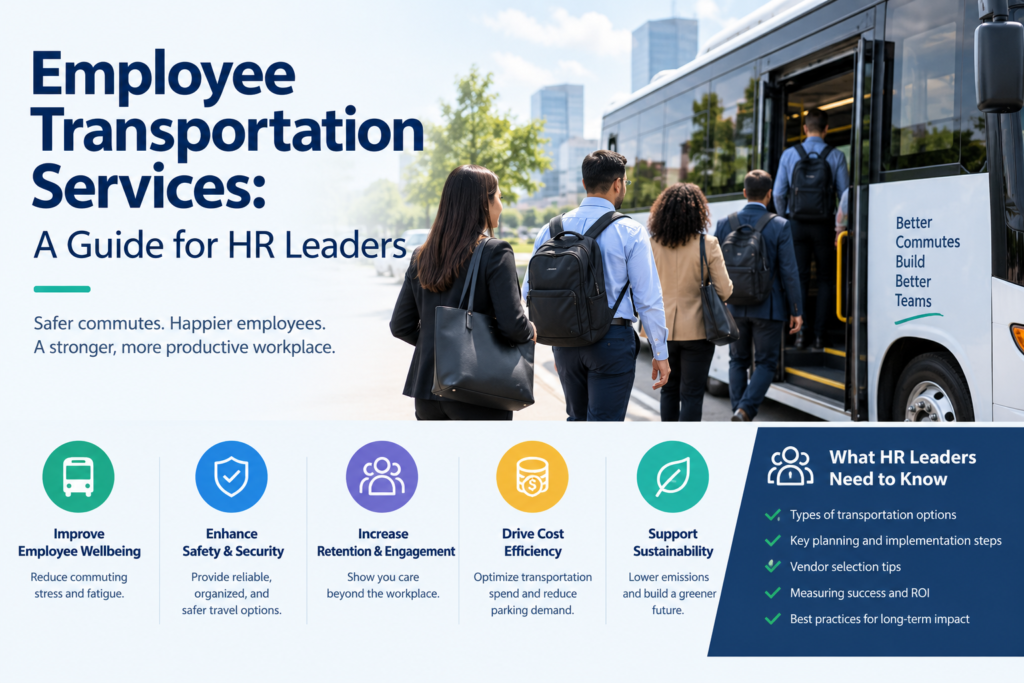
For many organisations, the employee commute is not a minor operational detail. It affects punctuality, attendance, workforce access, employee experience and the way people begin and end their working day. As workforces become more distributed and business hours become more varied, employee transportation services can give HR leaders a structured way to support daily mobility. The right approach is not simply to arrange vehicles. It is to design a safe, dependable and clearly governed transport experience that fits the organisation’s workforce, locations, schedules and policies. This guide explains what employee transportation services include, why they matter to HR leaders, how to evaluate a provider and which questions should be answered before implementation. Key Takeaways •Employee transportation services can support punctuality, access to the workplace and a more predictable employee experience. •A successful programme starts with employee travel patterns, work schedules, pickup requirements and safety expectations. •HR leaders should assess coordination, driver and vehicle standards, communication, privacy, incident processes and reporting before selecting a partner. •Transport should be treated as part of workforce experience and corporate mobility—not only as a vehicle-booking exercise. What Are Employee Transportation Services? Employee transportation services are organised mobility solutions that help employees travel between agreed pickup points, residential areas, offices, business facilities or other approved locations. Depending on the organisation, the service may support daily commuting, shift movement, late-hour travel, office transfers, business visits or specific workforce groups. The exact model can vary. It may involve scheduled routes, point-to-point movement, pooled transport, dedicated vehicles, employee shuttles or individually coordinated journeys. The most suitable option depends on factors such as workforce size, office locations, shift patterns, distance, budget, local transport conditions and company policy. For HR teams, the central question is not only, “Can employees reach the office?” It is also: Can the organisation provide a consistent, well-coordinated and responsibly managed travel experience that supports both employee needs and business requirements? [INTERNAL-LINK: corporate transportation services → Fiaara corporate service page] Why Should HR Leaders Pay Attention to Employee Transportation? Employee transportation sits at the intersection of people operations, facilities, administration, finance, safety and business continuity. A poorly organised commute can create recurring friction, while a well-designed programme can make workplace access more predictable. 1. It can support punctuality and schedule reliability When employees depend on inconsistent or limited public transport, arrival times may be difficult to predict. A coordinated transport programme can create clearer departure windows and planned movement between designated points. This is especially relevant for organisations with fixed start times, multiple shifts, early-morning operations, late working hours or offices located away from major public transport routes. Transportation does not eliminate every delay, but it can give the organisation a more structured way to plan and communicate daily movement. 2. It can improve the employee experience The workday begins before an employee enters the office. Long or uncertain commutes can affect energy, stress and the overall perception of the employer. A comfortable, respectful and clearly communicated transport service can remove some avoidable friction from the daily routine. HR leaders should avoid treating convenience as a luxury. For many employees, especially those travelling at unusual hours or across difficult routes, access to practical transport can influence how manageable the job feels. 3. It can support workforce access Transport can be a consideration in recruitment and retention, particularly when an organisation operates in an area that is difficult to reach or requires attendance outside standard hours. An employer-supported commute may help more employees consider a role that would otherwise be challenging to access. The result should not be presented as a guaranteed hiring or retention outcome. Instead, HR teams should evaluate whether transportation solves a real access problem for their workforce and whether employees value the proposed service. 4. It can strengthen operational coordination A centralised transportation process can give HR and administration teams a clearer view of routes, schedules, employee communication and service issues. This is often more manageable than handling informal travel arrangements across multiple teams. A transport programme should have defined ownership. HR may lead the employee experience, facilities may manage locations, finance may review cost and procurement may assess vendors. Clear responsibility prevents gaps when a route changes or an incident needs attention. What Should an Employee Transportation Programme Include? A strong programme is built around more than a route map. It should include the operating principles, communication process and service standards that make the daily journey dependable. Workforce and route assessment Begin with data and employee input. Understand where employees live, where they work, when they travel and which groups face the greatest access challenges. Useful information may include: •Office and facility locations. •Employee concentration by area. •Shift and roster timings. •Existing commute methods. •Common late-arrival or access concerns. •Accessibility requirements. •Preferred pickup points and reasonable walking distances. •Seasonal or occasional demand. Do not assume that a single route model will suit every workforce. A hybrid approach may be more appropriate for organisations with different shifts, locations or employee populations. Scheduling and coordination Employees need clear information about pickup windows, meeting points, service changes and escalation contacts. The schedule should be practical rather than overly ambitious. It should include appropriate time allowances and a process for communicating changes. A reliable service is not defined only by speed. It is also defined by predictability, clarity and the ability to respond professionally when circumstances change. Safety and responsible operations Safety should be a core evaluation category, not an afterthought. HR leaders should ask how a prospective partner manages vehicle condition, driver standards, route planning, passenger communication, emergency escalation and incident reporting. The applicable legal and operational requirements will vary by location and service model. Employers should obtain independent legal, insurance and compliance advice where needed, and confirm that the selected provider can meet the organisation’s own standards. The U.S. Department of Labor notes that travel during normal working hours may be treated differently from ordinary home-to-work travel under U.S. wage-and-hour rules. This is a reminder that transport policy can have employment-law implications depending on
Women Safety in Corporate Transportation: Why It Should Be Every Business’s Top Priority

Women Safety in Corporate Transportation: A Business Responsibility Beyond Compliance Introduction Modern workplaces are evolving rapidly, with more women joining the workforce across industries such as IT, BPO, healthcare, finance, consulting, manufacturing, and startups. While organizations continue investing in diversity, inclusion, and employee well-being, one critical factor often determines the overall employee experience—safe corporate transportation. For many women professionals, commuting to and from work is one of the most challenging parts of the day, especially during early morning or late-night shifts. Concerns about driver verification, isolated pickup points, vehicle tracking, and emergency support can directly influence an employee’s confidence, productivity, and even career choices. Today’s businesses are expected to go beyond offering transportation—they must provide a safe, reliable, and technology-enabled commuting experience. At Fiaara, we believe that women safety in corporate transportation is not just a service feature; it is a commitment to building safer workplaces and stronger organizations. Why Women Safety in Corporate Transportation Matters A secure commute is no longer considered an employee benefit. It has become a business necessity. When employees feel safe during their daily commute, organizations experience: Companies that prioritize safe transportation demonstrate genuine care for their workforce, helping build trust and long-term loyalty. Challenges Women Face During Daily Corporate Commutes Despite advancements in urban mobility, many women professionals continue to encounter transportation-related challenges. Safety During Early Morning and Late-Night Shifts Employees working rotational or night shifts often travel when public transportation is limited, increasing safety concerns. Lack of Verified Drivers Using unverified transportation services can create uncertainty and reduce passenger confidence. Limited Real-Time Visibility Without live tracking, both employees and employers have little visibility into the progress of a journey. Inconsistent Transportation Services Last-minute cancellations, delayed pickups, and poor vehicle conditions affect employee experience and workplace efficiency. Why Safe Corporate Transportation Benefits Businesses Investing in women-safe transportation is not only the right thing to do—it also delivers measurable business value. Improves Employee Retention Employees are more likely to stay with organizations that prioritize their well-being. Reliable transportation reduces commuting stress and enhances job satisfaction. Enhances Employer Brand Job seekers increasingly evaluate employers based on employee benefits and workplace safety. A strong transportation policy demonstrates that your organization genuinely values its people. Boosts Productivity Employees who commute safely and comfortably arrive at work more focused and prepared. Reduced commuting stress translates into higher workplace performance. Supports Business Continuity Reliable transportation minimizes absenteeism, late arrivals, and operational disruptions. Essential Features of Safe Corporate Transportation 1. Verified Professional Chauffeurs Every driver should undergo: Verified chauffeurs create a safer travel environment for employees. 2. Real-Time GPS Tracking Modern transportation solutions should include: Real-time tracking increases transparency and enables quick responses if needed. 3. SOS & Emergency Support A secure transportation system should provide immediate assistance through: Quick support can make a significant difference during unexpected situations. 4. Route Optimization Efficient route planning reduces travel time while ensuring employees are picked up and dropped off safely. Smart routing also minimizes unnecessary detours. 5. Well-Maintained Vehicles Vehicle quality directly affects passenger confidence. Professional corporate transportation providers ensure: The Role of Technology in Women’s Corporate Commute Safety Technology has transformed corporate transportation management. Today’s smart mobility platforms provide: Live Ride Tracking Employees and administrators can monitor trips in real time. Digital Trip Records Complete travel history improves accountability and operational visibility. Automated Notifications Ride confirmations, arrival alerts, and trip updates keep everyone informed. Data Analytics Businesses can optimize routes, monitor performance, and improve transportation efficiency using real-time insights. Building a Safe Corporate Mobility Culture Creating a safe commute goes beyond providing transportation. Organizations should also: A proactive approach builds a stronger safety culture. Why Businesses Choose Fiaara Fiaara delivers corporate transportation solutions designed around safety, reliability, and professionalism. Verified Chauffeurs Every chauffeur undergoes strict background verification and professional training. Real-Time Tracking Live ride monitoring provides complete journey visibility. Safe Employee Pickup & Drop Reliable transportation for regular office commutes and shift-based travel. Premium Fleet Comfortable, well-maintained vehicles suitable for executives and employees alike. 24/7 Support Dedicated assistance whenever employees need help. Smart Corporate Mobility Technology-enabled transportation management for modern organizations. Future of Women Safety in Corporate Transportation As workplaces become increasingly digital and employee-centric, transportation safety will continue to play a crucial role in organizational success. Businesses that invest in secure mobility solutions today will be better positioned to: Safe commuting is no longer just an operational requirement—it is a strategic investment in people. Internal Linking Suggestions Link this blog to: Suggested anchor texts: External Linking Suggestions Link to trusted and authoritative resources such as: Frequently Asked Questions (FAQs) Why is women safety important in corporate transportation? Women safety ensures employees can commute confidently, reduces stress, improves productivity, and strengthens employee trust in the organization. What features should a safe corporate transportation service provide? Essential features include verified chauffeurs, GPS tracking, emergency support, well-maintained vehicles, route optimization, and 24/7 customer assistance. How does safe transportation benefit businesses? Safe transportation improves employee retention, increases productivity, reduces absenteeism, and enhances employer branding. How does Fiaara ensure women safety during corporate travel? Fiaara provides verified chauffeurs, real-time ride tracking, premium vehicles, smart route management, and dedicated support to ensure every journey is safe and reliable. Conclusion Women safety in corporate transportation is no longer just about meeting organizational policies—it is about creating a workplace where every employee feels respected, protected, and valued. By investing in secure transportation systems, verified chauffeurs, advanced technology, and employee-first mobility solutions, businesses can improve operational efficiency while fostering trust and inclusivity. With Fiaara’s corporate transportation solutions, organizations can provide safe, reliable, and premium commuting experiences that empower employees and support long-term business growth. Because a safer commute builds a stronger workforce. Choose Fiaara for secure corporate transportation that puts people first. 🚖